 It may be entirely apocryphal, but I was once told that in ancient China, it was the practice to pay your doctor when you are healthy, and your payments would stop when you are sick. This economic model -- the wellness model -- makes far more sense than our current system, in which physicians, including myself, make more money from you being sick than being healthy.
If you look at any other industry, it is apparent that the medical habit of paying for failure is entirely topsy-turvy. Should you pay the airline for not getting you to Hoboken in time for Thanksgiving at Aunt Marcy's? Should you tip the waitress more for bringing cold coffee and yesterday's French fries? Of course not. But when it comes to health care, the sicker you are and the longer you take to get better, the more your doctor makes.
What brought this to mind recently was my daughter's acceptance into college, and the concomitant realization that I was now on the hook for a considerable annual fee to join the august club of College Student Parents. I was bemoaning my fate to a friend who also happens to be a patient. They just looked at me and said:
"You know what your problem is, doc? You get your patients better too fast."
Well now, there's a concept. In what other industry could I possibly be in where I actually hurt myself financially by improving my performance?
The medicopharmaceutical industry has neatly tied up both ends of this ribbon. On the one hand, they create new diseases, find ways of convincing you and your non-chiropractic doctors that you have it (adult ADHD, anyone?), then sell you on a lifetime of pills to fix it. The Great 20th Century Statin Deficiency is another example. Through corrupted research and savvy marketing techniques -- up to and including the use of prostitutes at medical conferences -- the pharmaceutical companies have deluded millions of healthy Americans and their medical doctors into believing that they must take their daily dose of statins to survive. Nothing could be further from the truth, of course, but there's nothing wrong with a healthy revenue stream, is there?
On the other hand, they market drugs as tools of disease prevention, all the time knowing that the nostrums they peddle do little to encourage better health. A perfect example of this are the bisphophonate drugs, such as Fosamax. We now know that bisphonates not only fail to create healthier bone, they also kill the very bone that they are supposed to strengthen.
Long before reaching that fraudulent extreme, however, there is a sound basis for wellness, or preventative care.
Both proper diet (a term I am loathe to use these days, as it has been sorely abused by the media) and exercise are, of course, the foundations of preventative care. But aside from these factors, what should be stirred into the mix of preventative care?
Here's what the research shows us:
- Seniors who receive regular chiropractic manipulation use fewer drugs, have fewer hospital stays, spend less time in rehab, and live healthier lives.
- Pregnant women who recieve regular chiropractic manipulation require fewer ceasarian births.
- It should go without saying -- but in fact, is well supported by the research -- that preventative chiropractic manipulation reduces the risk of suffering from low back pain.
And that's just chiropractic manipulation alone. What about the other services provided by chiropractic physicians?
Acupuncture is one of the therapeutic approaches I use the most for treating people with a variety of existing conditions. But does it make any sense at all to adopt a "preventative acupuncture" strategem?
The research on this topic is surprisingly vacant. While a number of studies have discussed the effectiveness of acupuncture for early intervention in disease processes, this is far from the idea of wellness. A few articles have noted that traditionally, regular acupuncture at certain points has been regarded as beneficial for seniors.
I'm not going to hold my breath waiting for some research to appear, however. Government funding for acupuncture research is only slightly higher than the homeopathic doses grudgingly dispersed for chiropractic manipulation. So how do we decide?
I remember when I posed this question to one of my acupuncture professors: How often should we have a patient return for preventative care?
He didn't break stride. "Of course," he said. "When the universe changes." And then he went on to discuss some observations of the more esoteric uses of Bupleurum.
The answer didn't make sense to me at first, but as I puzzled over it during the following week, I finally realized what he meant. The aim of acupuncture -- indeed, chinese medicine as a whole -- is to put the individual in balance with the environment. Any time that there is a change in the person's environment, they must respond by altering their metabolism and behavior. (This process is known as "homeostasis" in modern biology). Thus, when the universe changes, the individual can use assistance that acupuncture provides in adapting to the altered environment.
When does the universe change? We need look no further than directly around us to tell. When the fresh green of springtime appears, the universe is changing. When the leaves turn brown and fall from the trees in autumn, the universe is changing. At the height of summer, as the sun ascends to its northernmost latitude above the equator, the universe is changing. And, finally, in the dead of winter when the day's length reaches its nadir, the universe is changing.
The change in seasons does, in fact, affect our health. The fluctuation in communicable diseases, mental health, and the course of some chronic disorders is profoundly affected by the time of the year.
So, from a very practical standpoint, it makes sense to evaluate and adjust your position in the universe as the universe itself changes. And in the absence of more precise clinical data, it is on that concept that I rest my recommendations for preventative -- or should we say adaptive -- acupuncture.
See you when the universe changes!


 Every patient who walks into my exam room receives -- at no extra charge! -- a critical evaluation of their exercise regimen, or lack thereof. At this point, regular exercise has been proven so critical in the prevention and treatment of so many disorders, from depression to cancer to heart disease to the cold and flu, that in my not-very-humble opinion, any primary care doctor who does not investigate, evaluate and manipulate their patient's exercise program is committing malpractice. Yes, it's that important. It's like not taking a patient's blood pressure or pulse. A person's participation in exercise is one of the vital signs of wellness.
Frequently, my job is to find exercises that will work within the boundaries set by a patient's existing disorder while at the same time optimizing it to reduce or eliminate the effects of that same disorder.
Every patient who walks into my exam room receives -- at no extra charge! -- a critical evaluation of their exercise regimen, or lack thereof. At this point, regular exercise has been proven so critical in the prevention and treatment of so many disorders, from depression to cancer to heart disease to the cold and flu, that in my not-very-humble opinion, any primary care doctor who does not investigate, evaluate and manipulate their patient's exercise program is committing malpractice. Yes, it's that important. It's like not taking a patient's blood pressure or pulse. A person's participation in exercise is one of the vital signs of wellness.
Frequently, my job is to find exercises that will work within the boundaries set by a patient's existing disorder while at the same time optimizing it to reduce or eliminate the effects of that same disorder.


 The annual Fear Campaign is about to begin, as everybody with a pulse will have it hammered into their heads that if they don't get a flu shot, They Will DIE!
Remember the swine flu campaign of last year? It turned out,
The annual Fear Campaign is about to begin, as everybody with a pulse will have it hammered into their heads that if they don't get a flu shot, They Will DIE!
Remember the swine flu campaign of last year? It turned out, 

 I'm kicking off this year's fall/winter lecture series with what I think may be one of my best -- and most important -- lectures ever. It will be held at 7 p.m. at the Litchfield Community Center, on September 22.
The title of the lecture is What To Do When The Drugs Don't Work, and will discuss the ways that alternative medicine can assist people suffering from chronic illness.
I'm kicking off this year's fall/winter lecture series with what I think may be one of my best -- and most important -- lectures ever. It will be held at 7 p.m. at the Litchfield Community Center, on September 22.
The title of the lecture is What To Do When The Drugs Don't Work, and will discuss the ways that alternative medicine can assist people suffering from chronic illness. For most of the past 100 years, chiropractic physicians and their patients were the only torch-bearers for safe, patient-centered alternative medicine. During the anti-alternative purge of the 20th century, homeopathy was all but wiped out in this country, surviving only on the fringes in Europe for 60 years. Osteopaths, once allied with chiropractors in their unique approach to health, threw in the towel and were co-opted by mainstream medicine; today, the difference between an osteopathic doctor and a medical doctor is indistinguishable except for the initials after the name.
Providers of nutritional and herbal medicine such as the Thompsonians and Eclectics were all but exterminated, and by the 1950s, chiropractic was the only profession left that could provide patients with informed, educated, alternative medicine.
For most of the past 100 years, chiropractic physicians and their patients were the only torch-bearers for safe, patient-centered alternative medicine. During the anti-alternative purge of the 20th century, homeopathy was all but wiped out in this country, surviving only on the fringes in Europe for 60 years. Osteopaths, once allied with chiropractors in their unique approach to health, threw in the towel and were co-opted by mainstream medicine; today, the difference between an osteopathic doctor and a medical doctor is indistinguishable except for the initials after the name.
Providers of nutritional and herbal medicine such as the Thompsonians and Eclectics were all but exterminated, and by the 1950s, chiropractic was the only profession left that could provide patients with informed, educated, alternative medicine. Even if you don't follow health news closely, it would have been hard to miss the recent headlines as the diabetes drug Avandia went "on trial" before the FDA.
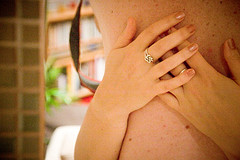 While on vacation last week, I had the opportunity (and the need) to do something I rarely do at home: Get a chiropractic adjustment.
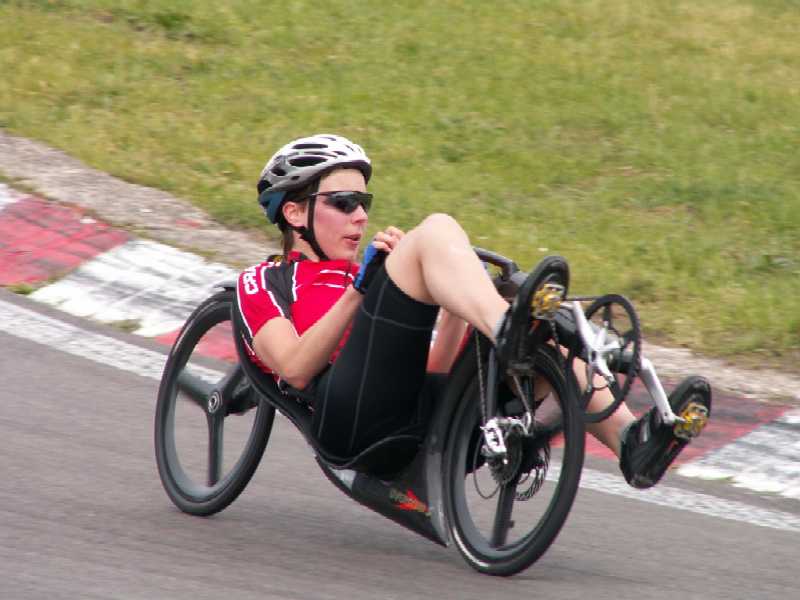
The need was spurred by a headache subsequent to a 100-mile bike ride that saw me traverse Cape Cod from outermost Provincetown to downtown Hyannis, and back again. It was a pleasant trip, though exceedingly hot. And even though I ride a recumbent bicycle, which is far more comfortable for the neck over long distances than a standard upright, the recumbent in the extremely laid-back configuration can produce significant neck strain over time.
While on vacation last week, I had the opportunity (and the need) to do something I rarely do at home: Get a chiropractic adjustment.
The need was spurred by a headache subsequent to a 100-mile bike ride that saw me traverse Cape Cod from outermost Provincetown to downtown Hyannis, and back again. It was a pleasant trip, though exceedingly hot. And even though I ride a recumbent bicycle, which is far more comfortable for the neck over long distances than a standard upright, the recumbent in the extremely laid-back configuration can produce significant neck strain over time.
 More bicycling than doctoring, but


